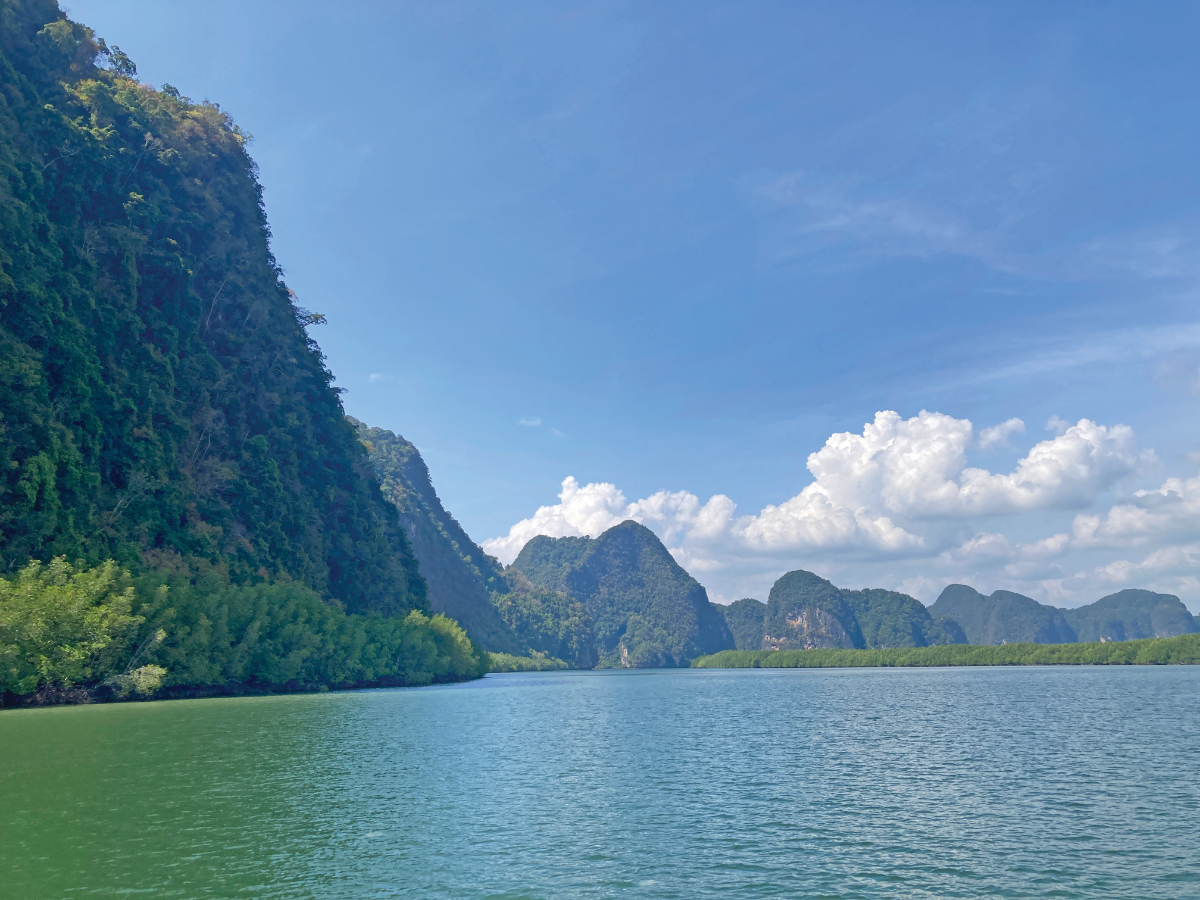
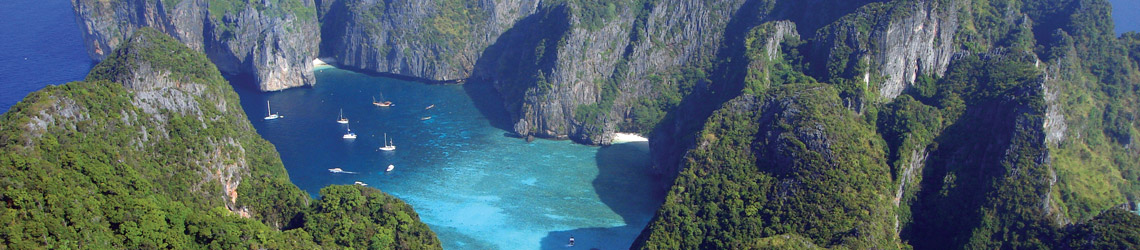
The sheer-sided sea mountains that rise vertically out of Phang Nga Bay form some of Thailand’s most spectacular scenery. Images of Phang Nga have travelled the world. They have shaped perceptions of southern Thailand and the boating experiences that await you here.
As a result, the cruising yachtsman may encounter many tour boats during the middle hours of the day. Fortunately, tranquillity does return by late afternoon.
While the bay itself is not large, the number of islands, inlets and mangrove channels to explore is almost endless. No matter how long a yachtsman spends here, new experiences will always be nearby. We list only a selection of the many anchorages in this area. The joy of sailing in Phang Nga Bay, after all, lies in discovering the uncounted creeks, caves and coves for yourselves.
North Phang Nga Bay | Photo by Grenville Fordham
Most islands are uninhabited. They offer secluded anchorages under soaring cliffs fringed with jungle. Fascinating dinghy expeditions await to hidden beaches, caves and creeks not shown on charts or maps. The famous features of this bay are the ‘hongs’ – Thai for room.
These shallow-water fully enclosed lagoons, open to the sky, are accessible only through caves at certain stages of the tides. If you’ve seen the movie The Beach, that ‘hong’ was CGI generated. These ones are spectacularly real.
Do not under any circumstances run dinghy engines in the caves or ‘hongs’. The two-stroke petrol fumes and noise can play havoc with the bat population. Be aware these are delicate and otherwise unspoiled ecosystems.
Three rivers run into the head of the bay so the water is silty, though otherwise clean, forming a milky green backdrop to the striking scenery.
At certain times of the year the bay is teeming with bigger-than-basket-ball-sized jellyfish, lovingly known as ‘snotties’. When this happens the local fishermen are out in droves with big scoop nets as the dried tentacles are an north Asian delicacy. They can inflict a mild sting and each one has its own ecosystem of lice, fish and crustaceans under the mantle.
There have been sporadic reports of much more serious stinging jellies seen in the mangrove creek areas of the bay, so please don’t swim around mangrove roots without a full chest ‘rashie’ on.
Since a large part of the area north of Koh Yao is shallow (less than 10 metres), it’s possible to anchor virtually anywhere in north Phang Nga Bay. This chapter, then, focuses only on the more suitable overnight anchorages – those providing shelter from the squalls and storms which can hit unexpectedly, particularly in the southwest monsoon season.
Much of the area covered by this section is National Park and rangers patrol around the islands. The entry fee is currently 400 baht per day per person on board, and the rangers collect it in cash on the spot.
Note that this website may not reflect the most recent updates to the printed book and the eBook. While every effort has been made to ensure that the information contained in this book is accurate, the charts of anchorages are based on personal experience and satellite imagery and are intended as a guide only. They should not be used for navigation. Please refer to Official Hydrographic Charts of the respective countries.